
Field notes from the
internet's plumbing.
Practical guides on URL redirects, DNS, and the kind of SEO infrastructure that quietly costs you traffic when nobody's watching.
Featured
01How to Check a Redirect Chain, Hop by Hop
A redirect that returns the wrong code costs you quietly: a 302 where you meant a 301, four hops where one would do, a chain that lands on a 404. A browser hides that path by default and shows you the last page, so nothing looks wrong until you go looking. Checking a redirect means seeing every hop, the status code on each one, how long each took, and where the chain finally stopped. This guide shows how to do that with a free redirect checker, in Chrome DevTools, and with curl, what every status code and verdict means, and the fix for each problem a check turns up.
Pillar guides
2 piecesRedirect an Old Domain to a New Domain on WordPress
Moving a WordPress site to a new domain looks simple until the old URLs stop working. Get the redirect type wrong, drop the path, or forget to update WordPress's own settings, and you lose the rankings and traffic that were built on the old domain. This guide covers every real way to redirect it: a WordPress plugin, .htaccess on Apache, an nginx config, or a DNS-level redirect service, when each one is the right call, and how to verify the redirect actually works before you tear anything down.
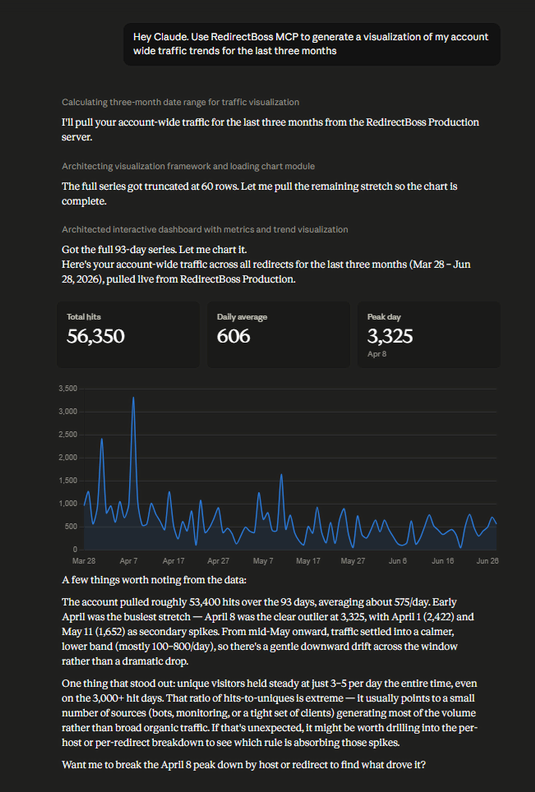
Configure, Manage, and Monitor Your Redirects, Click-Free
Most redirect work is dashboard work: log in, find the host, add the rule, pick the status code, save, verify in another tab. None of it is hard. All of it is clicking. Connect your RedirectBoss account to an AI assistant like Claude through our Model Context Protocol (MCP) server and you can just ask: "set up this redirect, keep the path," or "show me every redirect with a configuration problem," or "chart my traffic for the last three months." The assistant calls the same API the dashboard uses, works out what you meant, and does the clicking for you, including the auditing nobody gets around to.